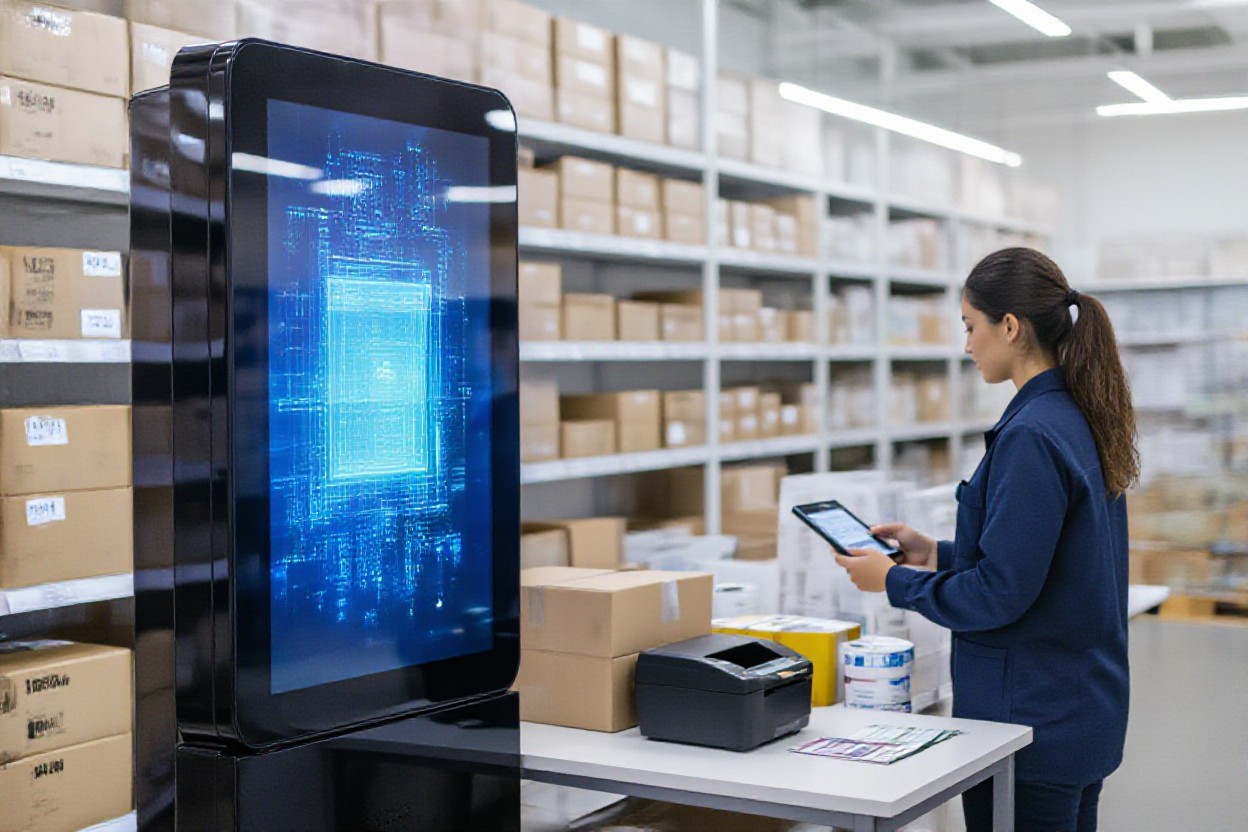
CustomerService powered by an AI receptionist lets you scale support by automating FAQs, routing complex cases, and personalizing responses so your team focuses on exceptions; you gain 24/7 availability and cost savings, while managing the privacy and bias risks through governance, monitoring, and rigorous testing to preserve customer trust and reliability.
Key Takeaways:
Automates repetitive support tasks (order tracking, FAQs, returns) to reduce response times and free agents for complex issues.
Scales customer service cost-effectively by handling high volumes 24/7 while routing escalations to live agents and preserving brand voice.
Integrates with ecommerce platforms, CRMs, and analytics to personalize interactions, surface insights, and improve performance from conversation data.
The Role of AI in E-commerce
AI lets you scale support and personalization simultaneously: by automating routine workflows you can handle thousands of interactions in parallel, with vendors claiming up to 80% of routine inquiries can be resolved without a human. Recommendations and personalization already drive a large share of revenue-Amazon’s recommendation engine is estimated to account for roughly 35% of its sales-while misconfigured models introduce privacy and bias risks that can damage trust.
Understanding Customer Needs
You identify intent by combining real‑time behavior, purchase history, and sentiment analysis so you can predict next actions and tailor outreach. Practical setups segment visitors into actionable cohorts (abandoners, high‑value, price‑sensitive) and trigger targeted flows; brands that implement predictive retention models often see 10-20% improvements in repeat purchase, while poor segmentation can increase churn.
Enhancing User Experience
You reduce friction with AI chat, visual search, and personalized product discovery that cut response times from hours to seconds and provide 24/7 assistance. Implementing intelligent size recommendations, return automations, and contextual upsells can lift conversion and lower return rates, but you must balance automation with clear escalation paths to humans.
In practice you should A/B test conversational flows, measure containment and CSAT, and tune handoff thresholds; integrating AI with your CRM lets you surface order context and loyalty status in responses. Operationally this can lower cost‑per‑contact by 30-50% for routine issues, yet flawed routing or stale training data poses a real risk to satisfaction and revenue if you don’t monitor performance metrics continuously.
Benefits of AI Receptionists
You scale support without linear staffing, letting an AI Receptionist for eCommerce 24/7 | Turn Shoppers into Customers handle common inquiries, process returns, and route complex issues. Many merchants report handling up to 70-80% of routine queries automatically, cutting average reply time to seconds and freeing agents for high-value work so your brand sustains service during peaks and holidays.
24/7 Availability
When you provide nonstop automated reception, shoppers get instant answers outside business hours, which reduces abandoned carts and missed leads. Brands that add after-hours chat and call handling often see a 10-30% lift in conversions outside standard hours, while you only escalate urgent cases to humans, preserving agent capacity for complex problems.
Cost-Effectiveness
Implementing an AI receptionist typically lowers support costs by 30-50% through automation of repetitive tasks; you cut hiring and training expenses while improving throughput, which reduces per-ticket cost and makes scaling less risky as order volume grows.
For example, if your team handles 1,000 tickets monthly at $5 each ($5,000), automating 60% drops human-handled tickets to 400, saving roughly $1,800-$3,000 per month after platform fees; you can often achieve payback in 2-6 months when factoring reduced overtime and higher retention from faster resolutions.
Key Features of AI Receptionists
You get 24/7 support, automated order lookups, multilingual handling, self-service returns, personalized product suggestions and seamless human escalation; many teams see up to a 60% drop in agent load and 40% faster resolution on common queries. The system routes across chat, email and SMS while flagging suspicious activity in real time. This lets you scale volume without degrading CX.
24/7 support - continuous triage so you don’t miss peak-hour spikes.
Natural Language Processing (NLP) - intent detection and entity extraction for accurate automation.
Multichannel routing - unify chat, email, SMS, and social DMs into one workflow.
Order management integration - pull order status, items, and tracking from Shopify, Magento, WooCommerce.
Self-service returns & refunds - generate labels, process refunds, and update orders automatically.
Conversational commerce - real-time upsells and cross-sells based on cart and order data.
Human escalation - smart routing to specialized agents with context and transcripts.
Analytics & reporting - CSAT, resolution time, and intent trends for continuous optimization.
Fraud detection - pattern signals and velocity checks to surface risky orders.
Multilingual support - auto-translate and localize responses for global customers.
Natural Language Processing
You use NLP to convert freeform messages into actionable intents and entities, often achieving >90% intent accuracy when models are fine-tuned on 10k-50k historical chats. It extracts order numbers, SKUs, dates and refund reasons so you can auto-resolve 30-50% of routine tickets; entity confidence scores let you route low-confidence cases to agents. This reduces manual tagging and speeds up automation deployment.
Integration with E-commerce Platforms
You connect the receptionist via APIs and webhooks to platforms like Shopify, Magento, BigCommerce and WooCommerce, syncing orders, shipments and customer profiles in real time; typical API round-trip latency stays under 200ms with hosted connectors. Prebuilt adapters often cut integration time to days and let you push updates (refunds, tracking numbers) from the chat flow.
You map platform events to support flows-for example, auto-sending a refund link when an order status changes to returned, or routing “missing order” claims to logistics if tracking shows in-transit. Implement OAuth with scoped tokens and audit logs to protect PII, and use incremental syncs to avoid rate limits. A midsize retailer reported cutting average handle time from 8 minutes to 2 minutes on order inquiries after enabling direct order fetches from Shopify.
Implementing AI Receptionists
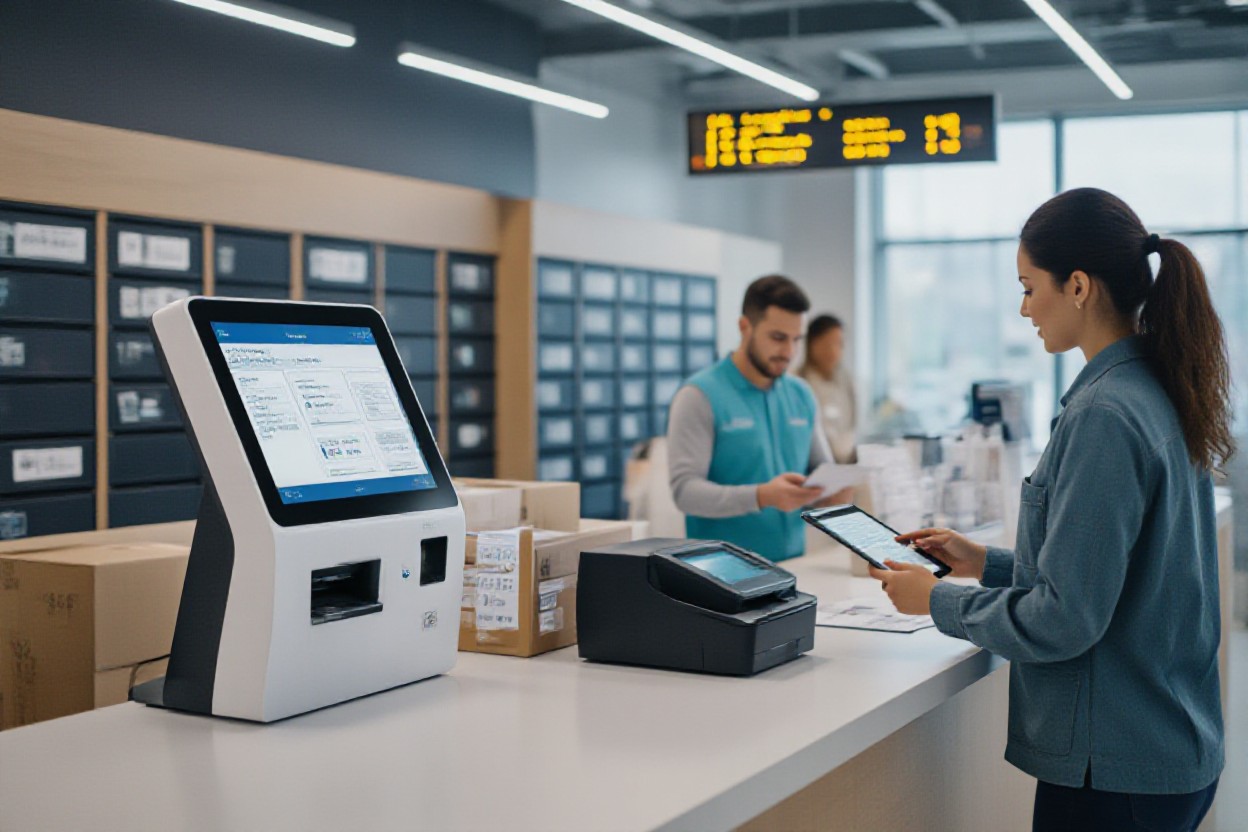
You'll map workflows, integrate via API or widgets, and set fallback rules; many teams complete setup in 1-3 days for basic flows. Measure KPIs like first response time (often cut from hours to seconds) and automation rate (brands commonly reach 30-60%). Use the Best AI Receptionist: A Practical Selection Guide to compare vendors, pricing, and live-demo outcomes before committing.
Choosing the Right Solution
You should shortlist solutions that offer omnichannel coverage, SOC 2 or GDPR compliance, and native integrations with Shopify or Zendesk; aim for under $0.01 per conversation for high-volume chat. Validate handoff latency (under 200ms) and test NLU on a 14-day pilot with real traffic - one mid-size retailer saw a 40% cost reduction by automating returns and tracking queries during pilot.
Training and Optimization
You'll seed the model with at least 1,000 labeled examples, define 25-50 intents, and create fallback flows for edge cases; weekly retraining using live feedback typically lifts resolution rates by 15-25%. Monitor precision and recall, set escalation thresholds, and log misclassifications to keep human agents focused on complex issues.
You should sample 5% of live conversations daily for review and apply active learning to surface high-uncertainty cases; use entity extraction to auto-fill order IDs and prioritize high-value flows (returns, payments) with accuracy targets of 90%+. Run monthly A/B tests on phrasing, maintain an updated utterance library, and combine supervised fine-tuning with human-in-the-loop QA to drive fallback rates below 5%.
Challenges and Considerations
Scaling an AI receptionist forces trade-offs: you must balance automation speed against nuanced, high-value interactions, manage training data drift, and build monitoring so issues don't compound-one flawed intent mapping can affect thousands of monthly tickets if your store handles, say, 50,000 interactions. You also need integration with order, returns, and CRM systems, budget for continuous model updates, and SLAs that define when humans step back in to avoid reputational or financial fallout.
Overcoming Customer Skepticism
You win skeptical shoppers by being transparent: label bot messages, offer an immediate human fallback, and personalize responses with order data. Pilot tests work well-one DTC brand ran an A/B test and saw an 8% lift in conversion when the bot introduced itself and offered a live-agent option within 60 seconds. Consistent tone, short confirmations, and visible escalation paths reduce abandonment and build trust quickly.
Data Privacy and Security
You must treat customer data as high-risk: comply with GDPR and CCPA, enforce encryption, and keep retention minimal. Noncompliance can be expensive-GDPR fines reach up to €20 million or 4% of global turnover. Require vendor DPAs, limit PII exposure in training sets, and audit access logs so you can prove controls during incidents and audits.
Operationalize privacy by design: pseudonymize customer identifiers, use AES-256 at rest and TLS 1.2+ in transit, and enforce role-based access with MFA. You should run quarterly penetration tests, request SOC 2 or ISO 27001 evidence from providers, and keep a tested incident response plan that includes breach notification timelines and consumer remediation steps.
Case Studies of Successful Implementations
You’ll see how an AI receptionist transformed workflows across multiple e-commerce brands, cutting customer service costs and scaling peak volume handling. Below are concrete, numbered examples showing timelines, percent changes, and ROI so you can compare benchmarks against your own operation.
Brand A (apparel): Implemented an AI receptionist in Q1, achieving a 70% automation rate for returns and sizing queries, reducing average handle time from 6m to 90s and lowering support costs by 45% within 4 months.
Brand B (electronics): Deployed conversational flows for troubleshooting; first-response time dropped from 4h to under 30s, CSAT rose from 82% to 92%, and order cancellations declined by 18% over 6 months.
Brand C (subscription boxes): Used the system to manage churn prevention; upsell conversion improved by 12%, monthly retention increased by 6 percentage points, and payback period for the implementation was 3 months.
Brand D (home goods): Scaled to handle 5x holiday volume without hiring temporary staff, average queue length fell to zero, SLA compliance jumped to 99%, and annual savings exceeded $320K.
Brand E (marketplace): Integrated with CRM and returns; automated 55% of tickets, fraud-related false positives dropped by 40%, and time-to-resolution improved by 60% within 90 days.
Notable E-commerce Brands
You’ll recognize patterns across marketplaces, DTC apparel, electronics retailers and subscription services where an AI receptionist handles FAQs, routing, and returns at scale. Many brands reported a 30-70% reduction in repetitive tickets and used that capacity to focus human agents on high-value issues that grow revenue.
Measurable Outcomes
You should track automation rate, first-response time, CSAT/NPS, cost per ticket, and ROI; leading implementations show automation of 50-75%, CSAT lifts of 5-12 pts, and payback within 3-6 months, depending on volume and integration depth.
To dive deeper, measure baseline ticket volumes, categorize top queries, and run A/B tests on conversational flows-then monitor weekly shifts in automation rate, average handle time, and revenue impact from recovered orders; these metrics tell you whether the AI receptionist is truly driving operational leverage and customer experience improvements.
Summing up
Summing up, an AI receptionist lets you scale customer service without sacrificing personalization: it handles routine inquiries, routes complex issues to agents, provides 24/7 support, and analyzes interactions to improve workflows. By integrating with your storefront and CRM, you reduce response times, lower costs, and free your team to focus on higher-value work, making your e-commerce operation more resilient and responsive.
FAQ
Q: What is an AI receptionist for e-commerce brands and how does it help handle customer service at scale?
A: An AI receptionist is an automated conversational system that manages customer interactions across chat, email, SMS, and voice channels. It answers common questions (order status, returns, shipping, product details), processes routine requests (refunds, exchanges, cancellations), qualifies leads, and routes complex issues to human agents. By operating 24/7, handling many simultaneous conversations, and using natural language understanding and intent classification, it reduces agent workload, shortens response times, increases customer satisfaction, and enables brands to support larger volumes without linear headcount growth.
Q: How does integration and customization work with existing e-commerce platforms, CRMs, and workflows?
A: Integration typically uses APIs, webhooks, or platform-specific plugins (Shopify, WooCommerce, Magento) to sync orders, inventory, customer profiles, and support tickets. The AI receptionist can be configured to read order status, initiate returns, update shipping information, and create or append CRM records. Customization includes brand voice, canned responses, conversation flows, multilingual support, business rules for refunds or discounts, and escalation paths to live agents. Implementation involves mapping data endpoints, training on historical transcripts and product catalogs, testing flows, and setting monitoring and fallback behaviors to ensure consistent, compliant handoffs.
Q: How are data security, privacy, and compliance handled when the AI receptionist processes customer information?
A: Secure deployments use encryption in transit and at rest, strict access controls, audit logs, and role-based permissions. Providers should support compliance frameworks relevant to the business (GDPR, CCPA, SOC 2) and offer data retention and deletion controls, consent management, and options for data anonymization. Sensitive operations like payments are handled via tokenization or redirecting to PCI-compliant processors so card data is not stored by the AI system. Contracts should include data processing agreements and clear SLAs; regular security assessments, penetration testing, and monitoring help maintain ongoing compliance and reduce risk.
Related reading
AI Receptionist for Medical Practices: HIPAA-Compliant Patient Communication
Medical practices face high call volumes and strict HIPAA requirements. AI receptionist handles scheduling, refills, and reminders with full compliance.
AI Receptionist for Home Services: Capture Emergency Calls 24/7
Plumbers and contractors can't answer during jobs. AI receptionist captures urgent calls, qualifies jobs, provides quotes, and dispatches emergencies.
AI Receptionist for Auto Dealerships: Convert More Test Drives and Service Appointments
Car buyers research online but close in person. AI receptionist schedules test drives, books service appointments, and qualifies financing inquiries.
Never miss another call.
Join 500+ businesses capturing every lead with an AI receptionist that's live in under 20 minutes.